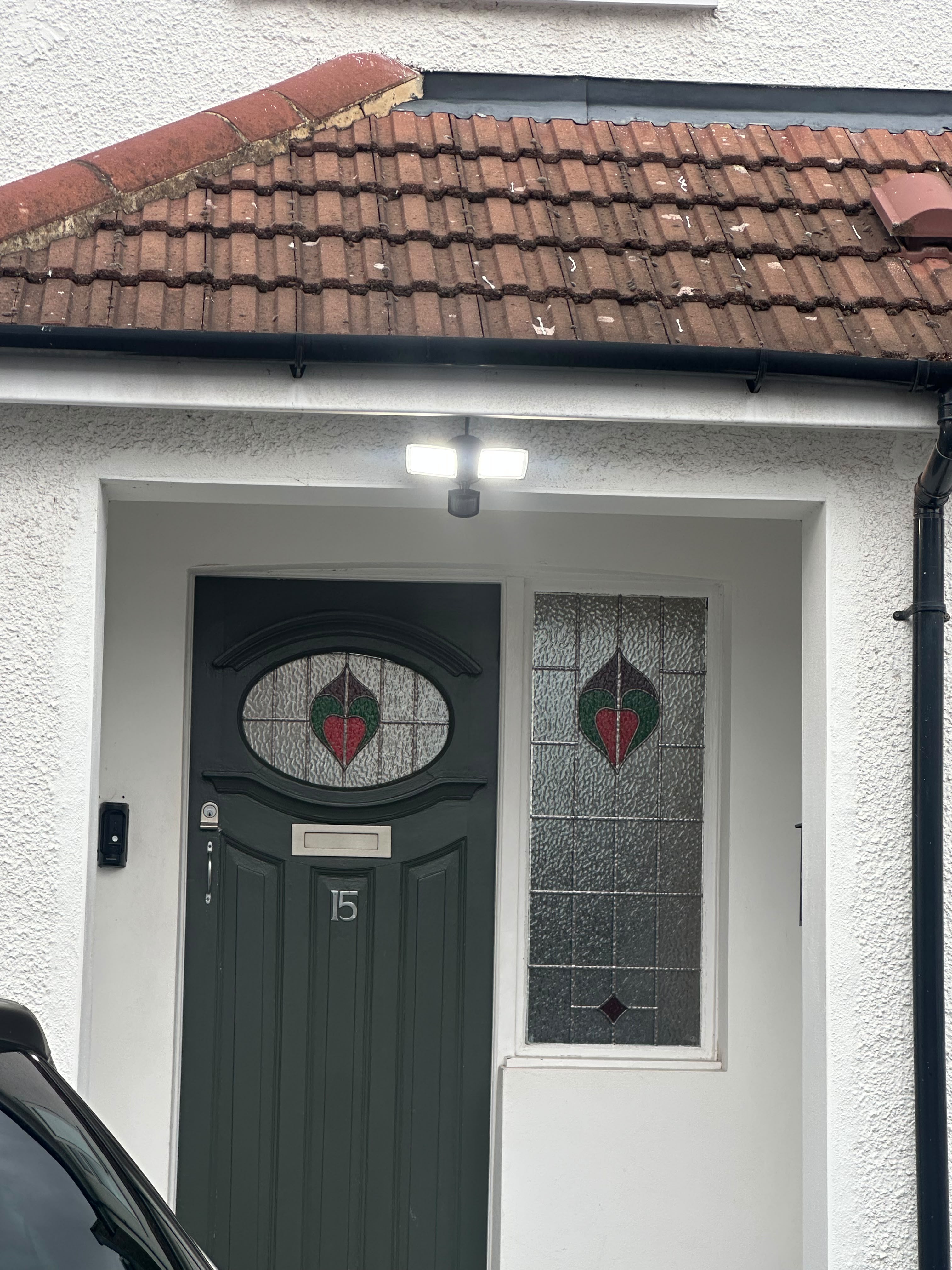
Need a security light that actually protects your property — without lighting up your neighbour's bedroom?
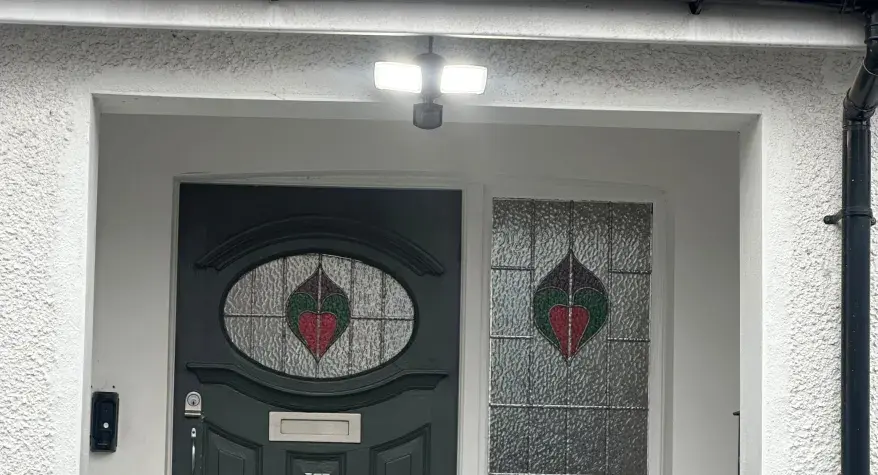
A badly positioned security light can do the opposite of what you want. It can trigger every time a fox walks past, shine directly into a neighbour's window, create harsh glare or leave the part of your driveway, garden or side passage you actually need to see in darkness.
Professional security lighting installation is about much more than fitting a bright floodlight to an outside wall.
The right light, correctly positioned and properly controlled, can improve visibility around your home or business, make entrances and access routes easier to see after dark and provide a practical layer of security without unnecessary light pollution or wasted electricity.
If you are looking for security lighting installation in Dollis Hill, Cricklewood or across North West London, Lighthouse Engineering Ltd can help.
Local Security Lighting Installation You Can Trust
Lighthouse Engineering Ltd is a NICEIC Approved Contractor and Which? Trusted Trader, with over 30 years of electrical experience.
Based in Dollis Hill, we provide electrical services for homeowners, landlords, letting agents and businesses throughout Dollis Hill, Cricklewood, Willesden Green, Kilburn, Wembley, Hampstead, Hendon and surrounding NW London areas.
Security lighting is not treated as a simple fitting replacement. We consider the property, access points, existing electrical installation, cable routes, sensor positioning and how the lighting will actually be used.
That means you get practical advice based on the property rather than simply being sold the brightest light available.
Need security lighting installed or an existing light replaced? Call Lighthouse Engineering on 020 8452 0694 for a free, no-obligation quotation.
What Is Security Lighting?
Security lighting is outdoor lighting designed to improve visibility around a property and provide illumination when it is most useful.
It can be used around:
- Front doors
- Driveways
- Garages
- Side entrances
- Side passages
- Rear gardens
- Gates
- Patios
- Communal entrances
- Commercial premises
- Car parks and access areas
Security lighting can be particularly useful where an entrance, pathway or access point becomes difficult to see after dark.
However, more light does not automatically mean better security.
A well-designed installation provides the right amount of illumination in the right places while minimising glare and unnecessary light spill.
Where Should a Security Light Be Positioned?
Positioning is one of the most important parts of a security lighting installation.
A light should illuminate the area where people approach, enter or move around the property.
For example, a front entrance may benefit from lighting positioned above or beside the door, while a driveway may require lighting further away to illuminate approaching vehicles and people.
Side passages can be more challenging because they are often narrow and enclosed. A powerful floodlight at one end may create excessive glare, whereas a smaller fitting positioned correctly can provide more useful coverage.
Before installing a security light, consider:
- Where people approach the property
- Where someone could potentially enter
- Which areas are poorly lit
- Where CCTV cameras are positioned
- Whether neighbouring windows could be affected
- Whether passing pedestrians or traffic could trigger a sensor
- Whether trees, walls or parked vehicles could obstruct the light
Good security lighting starts with positioning — not wattage.
PIR Security Lights: Are They Better?
For many homes, a PIR motion-sensor security light is a practical option.
PIR stands for passive infrared. The sensor detects movement associated with changes in infrared radiation, such as a person or animal moving through its detection area.
When movement is detected, the light switches on.
This means the light does not need to remain on throughout the night.
PIR security lighting can work particularly well for:
- Driveways
- Front entrances
- Side passages
- Garages
- Rear access
- Garden gates
However, PIR sensors need to be positioned and adjusted carefully.
A badly positioned sensor may repeatedly activate because of:
- Foxes
- Cats and dogs
- Passing pedestrians
- Vehicles
- Tree branches
- Movement outside the property
If your existing security light is constantly switching on for no obvious reason, the problem may not be the light itself. Sensor position, sensitivity and detection range may need to be checked.
Dusk-to-Dawn Security Lighting
Not every property needs motion-activated lighting.
A dusk-to-dawn security light uses a photocell to detect falling daylight and automatically switches the light on when it becomes dark.
This can be useful where a continuously illuminated entrance is preferred.
For example:
- Commercial entrances
- Rear business doors
- Communal access routes
- Building entrances
- House numbers
- Pathways
- Properties where regular illumination is preferred
The fitting will operate for considerably longer than a PIR light, so energy efficiency and sensible brightness become particularly important.
The photocell also needs to be positioned correctly. Light from another fitting can interfere with the sensor and cause unreliable operation.
How Bright Should a Security Light Be?
One of the biggest mistakes people make is assuming that the brightest security light is the best security light.
It isn't.
LED lighting is measured in lumens, which indicate the amount of visible light produced.
A small front entrance does not need the same output as a large driveway or commercial yard.
In many situations, several correctly positioned lights can provide better visibility than one extremely powerful floodlight.
Excessive brightness can create glare and strong contrast. The area directly underneath the fitting may be extremely bright while areas outside the beam become comparatively difficult to see.
The objective should be useful, even illumination rather than maximum brightness.
What Colour Light Is Best for Security?
Security lighting is available in different colour temperatures.
Very cold, blue-white lighting can appear harsh, particularly around residential properties.
Warm or neutral white light is often more comfortable for domestic applications while still providing good visibility.
The most important consideration is whether people, steps, paths, gates and potential obstacles can be seen clearly.
For CCTV systems, colour rendering can also be important because excessive glare or unsuitable lighting can affect the quality of recorded images.
Avoiding Light Pollution and Problems With Neighbours
Security lighting should protect your property without unnecessarily affecting someone else's.
This is particularly important in Dollis Hill, Cricklewood and other densely populated areas of North West London, where houses, gardens, driveways and windows can be relatively close together.
Avoid pointing a powerful security light directly towards:
- Neighbouring bedroom windows
- Gardens
- Roads
- Pavements
- Passing traffic
- Areas that do not need illumination
A correctly positioned and angled fitting can provide excellent visibility while significantly reducing unwanted glare.
Motion sensors should also be adjusted so that normal activity outside the property does not cause unnecessary activation.
Security Lighting and CCTV
Security lighting and CCTV can work well together, but they need to be considered as part of the same installation.
Lighting can improve the visibility of people approaching a property and may help CCTV capture useful footage.
However, placing a powerful light directly in front of a camera can create glare, reflections or overexposure.
The better approach is to consider the camera's field of view and the lighting position together.
If you are installing both CCTV and security lighting, planning the two systems together can produce a much better result.
Outdoor Security Lighting and Electrical Safety
External electrical installations are exposed to rain, moisture, temperature changes and accidental damage.
The installation should therefore use suitable equipment and protective measures and comply with the relevant requirements of BS 7671.
Before adding an external security light, the existing electrical installation should be considered.
This can include:
- The condition of the existing circuit
- Circuit capacity
- Earthing
- Protective devices
- RCD protection
- Cable type
- External connections
- Cable protection
- The suitability of the light fitting
- The location and mounting surface
Outdoor electrical work should not simply be treated as an extension of an indoor lighting circuit without checking whether the existing installation is suitable.
Following installation, appropriate inspection, testing and certification should be provided where required.
For landlords, businesses and managed properties, retaining electrical records can also make future maintenance and inspections easier.
What IP Rating Do I Need for an Outdoor Security Light?
The IP rating indicates how well electrical equipment is protected against the entry of solids and water.
The appropriate rating depends on where the fitting is being installed.
A light under a well-protected porch may have different environmental exposure from a fitting mounted on an exposed rear wall, gatepost or driveway.
The fitting should therefore be selected for its actual installation environment rather than simply choosing a fitting because it looks suitable.
Why Professional Security Light Installation Matters
A security light may look like a straightforward DIY job, but an installation can involve considerably more than connecting the fitting.
The electrician may need to consider:
- The existing circuit
Is the circuit suitable for the additional load?
- The cable route
Can the cable be installed safely and protected from damage?
- The location
Will the fitting illuminate the correct area?
- Sensor positioning
Will the PIR detect the people you want it to detect without constantly triggering?
- Environmental conditions
Is the fitting and associated equipment suitable for its location?
- Electrical protection
Is the installation appropriately protected?
- Testing
Has the installation been properly tested following completion?
Getting these details right can make the difference between a security light that works reliably for years and one that becomes a constant source of problems.
Security Lighting for Landlords and Rental Properties
Landlords should also consider security lighting as part of the wider condition and usability of a property.
External lighting can be particularly useful around:
- Communal entrances
- Side access
- Rear gates
- Bin stores
- Shared paths
- Parking areas
- External stairways
The lighting should provide useful visibility without causing unnecessary disturbance to tenants or neighbouring properties.
Where electrical work is carried out, keeping appropriate records and certification is important for ongoing property management.
Security Lighting for Businesses in NW London
Commercial properties often have different requirements from domestic homes.
A business may need lighting around:
- Staff entrances
- Rear doors
- Delivery areas
- Car parks
- Loading areas
- Storage areas
- Waste areas
- Access gates
For commercial premises, security lighting may also need to work alongside CCTV, alarms, emergency lighting or access-control systems.
A site assessment can help determine whether PIR, photocell, timed or manually controlled lighting is most appropriate.
Security Lighting Installation in Dollis Hill, Cricklewood & NW London
If you are searching for a security lighting electrician in Dollis Hill, Lighthouse Engineering Ltd can provide practical advice and professional installation.
We work with homeowners, landlords, letting agents and businesses throughout Dollis Hill, Cricklewood, Willesden Green, Kilburn, Wembley, Hampstead, Hendon and surrounding NW London areas.
With over 30 years of electrical experience, Lighthouse Engineering Ltd is a NICEIC Approved Contractor and Which? Trusted Trader.
We can help with:
- New security light installations
- PIR security lights
- LED security lighting
- Dusk-to-dawn lighting
- Driveway lighting
- Garden security lighting
- Side passage lighting
- External entrance lighting
- Replacement security lights
- Fault finding on existing security lights
- Sensor adjustment and replacement
- Commercial security lighting
Our approach is straightforward: listen to what you need, assess the property, explain the options clearly and install the right solution without recommending unnecessary work.
Need a Security Light Installed?
Don't just buy the brightest floodlight and hope it solves the problem.
If your security light is constantly triggering, not covering the area you need, shining into a neighbour's property or has stopped working properly, it is worth having the installation assessed.
Lighthouse Engineering Ltd can recommend the right security lighting solution for your property and install it safely and professionally.