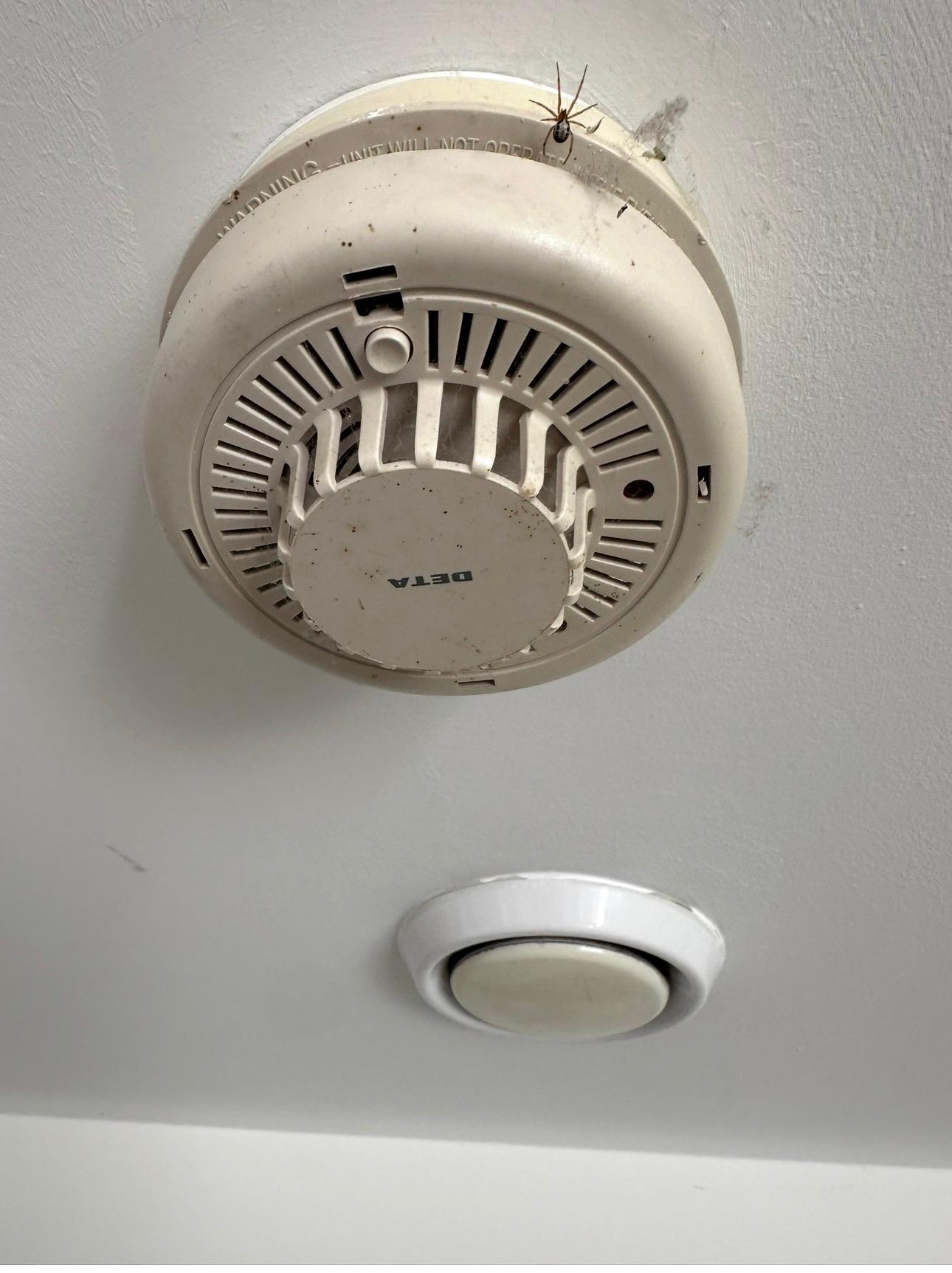
A smoke alarm that is missing, wrongly positioned or flat-battery silent can turn a manageable incident into a serious emergency.
This landlord smoke alarm checklist is designed for landlords and letting agents in North West London who want a practical way to check their rental homes, meet their responsibilities and keep tenants safer.
The legal minimum is only the starting point. Every property has a different layout, heating arrangement and tenant profile, so the right alarm system should reflect the real fire risks in the home, not simply tick a box on move-in day.
Start with the legal requirements in England
For rented homes in England, landlords must ensure there is at least one smoke alarm on every storey used as living accommodation. A carbon monoxide alarm must also be fitted in every room used as living accommodation that contains a fixed combustion appliance, excluding gas cookers.
Landlords must make sure alarms are in proper working order at the start of each new tenancy. After that, tenants should test alarms regularly and report faults promptly. Once a landlord or agent is told an alarm is not working, the landlord is responsible for repairing or replacing it as soon as reasonably possible.
Those are baseline duties, not a complete fire-safety plan. Licensing conditions for an HMO, council requirements, insurer conditions or the property’s layout may call for additional alarms, interlinked detection or a higher specification. A converted flat, a multi-storey house or a property with an open-plan kitchen needs more thought than a straightforward one-bedroom flat.
Landlord smoke alarm checklist before a tenancy begins
Complete this check before tenants collect the keys, ideally as part of the wider electrical and property handover inspection. Do not rely on a previous inventory or assume an alarm that looks clean is working correctly.
Confirm the right number and type of alarms
Walk through every level of the home used for living accommodation. There should be a smoke alarm on each storey, including a loft conversion where it forms part of the accommodation. In a typical house, the most useful locations are circulation spaces such as the hallway and landing, where an alarm can warn occupants as they leave bedrooms.
Avoid putting a smoke alarm directly in a kitchen, bathroom or very close to cooking appliances. Steam and cooking fumes can cause false alarms, and repeated nuisance activation may lead tenants to disable the alarm. A heat alarm is often more suitable for a kitchen, although it should not be treated as a replacement for the required smoke detection elsewhere.
Check whether alarms should be interlinked. When one alarm detects smoke, interlinked alarms sound together, giving occupants better warning throughout the home. This is particularly valuable in larger properties, homes with sleeping areas on upper floors and layouts where a fire may begin a distance from a bedroom. Hard-wired interlinked alarms with battery back-up are usually a dependable long-term choice, but the best arrangement depends on the property and the required category of system.
Test every alarm properly
Press the test button on each smoke, heat and carbon monoxide alarm. The alarm should sound clearly and promptly. If units are interlinked, test that the linked devices activate as intended.
A test button confirms that the alarm can sound, but it does not prove every sensing component is within its service life. Check the manufacturer’s date label, instructions and any end-of-life warning. Many domestic alarms have a stated working life of around ten years. Replacing an ageing alarm before it fails is more sensible than waiting for an intermittent chirp or a tenant complaint.
If an alarm fails the test, do not leave a spare battery at the property and hope it resolves the issue. Identify whether the fault is a battery, power supply, expired unit, contamination or a problem with the interlink. A hard-wired alarm that will not test may point to an electrical issue that needs attention from a qualified electrician.
Check power supplies and batteries
Battery-only alarms can meet the basic requirement, but they depend more heavily on battery condition and regular testing. Sealed, long-life battery alarms reduce the temptation and inconvenience of changing batteries, while mains-powered alarms with battery back-up offer reliable operation if the electrical supply fails.
Whatever system is installed, ensure each alarm has its intended power source connected and working. Do not fit removable batteries where the alarm is designed for a sealed battery, and never leave a detector without a battery to stop nuisance sounding. That creates a hidden safety gap and can leave both landlord and tenant exposed.
Look for placement problems
Check that alarms have not been painted over, covered, removed or blocked by furniture and stored items. Decorations, dust and building work can also affect detectors. If the property has recently been refurbished, make sure alarm heads were protected during dusty work and tested once the work was complete.
Positioning matters. An alarm mounted too close to an extractor fan, window, air vent or cooker may be less reliable. Conversely, an alarm tucked into an awkward corner may not detect smoke as effectively. Follow the manufacturer’s instructions and seek advice where the layout is unusual.
Record the condition at handover
Make a clear written record showing the address, date, alarm types and locations, test results and any work completed. Include photographs where useful, especially if you are managing several properties. Give tenants simple written information on where the alarms are, how to test them and who to contact if one chirps, sounds unexpectedly or fails a test.
A signed inventory can support this record, but it should not replace the actual testing. The purpose is not paperwork for its own sake. It gives everyone a clear account of the property’s condition at the beginning of the tenancy and makes follow-up easier if an issue is reported later.
Checks during the tenancy
Landlords do not need to enter a property every month to press alarm buttons. Tenants should be encouraged to test alarms regularly, usually monthly in line with the manufacturer’s guidance, and report any problem immediately.
At planned inspections, ask whether any alarm has been chirping, falsely activating or damaged. With suitable notice and the tenant’s agreement, test the alarms during the visit and record the outcome. This is also a good time to check that smoke alarms have not been removed after false alarms caused by cooking.
Respond quickly when faults are reported. A low-battery warning, end-of-life signal or broken cover may feel minor, but the detector is part of the property’s life-safety equipment. Clear communication matters here: tell the tenant when attendance is arranged, what work will be carried out and whether access is needed.
Do not overlook carbon monoxide alarms
Smoke alarms and carbon monoxide alarms do different jobs. Carbon monoxide cannot be seen or smelled, so a carbon monoxide alarm is a vital warning where fixed combustion appliances are present. This can include a gas boiler, gas fire, wood burner or solid-fuel stove. Gas cookers are excluded from the specific alarm requirement, but the wider safety of gas appliances still needs proper attention.
Fit the alarm in accordance with the manufacturer’s instructions, as suitable placement depends on the appliance and the type of detector. Test it at the same time as the smoke alarms and include it in the same property record. If a carbon monoxide alarm sounds, tenants should treat it seriously, get fresh air where safe to do so and seek urgent professional advice rather than simply silencing the unit.
When an electrician should assess the system
A simple battery alarm replacement may be straightforward, but it is worth involving a qualified electrician when a property needs hard-wired alarms, interlinking, fault-finding or a system upgrade. This is especially relevant after a rewire, loft conversion, extension, change of use or HMO licensing requirement.
The right solution is not always the most elaborate one. A small rental flat may need a carefully placed, compliant arrangement, while a larger house may benefit from a more comprehensive interlinked system. An electrician can assess cable routes, existing circuits, battery back-up, alarm siting and the standard appropriate to the property without making the job more complicated than it needs to be.
For landlords and agents around Dollis Hill and Cricklewood, Lighthouse Engineering Ltd can install, test and upgrade smoke and heat alarm systems with clear written quotations and practical advice. The aim is to leave you with a system that works properly and records that make sense when you need them.
A well-managed alarm system is one of the simplest ways to protect the people living in your property. Check it before every new tenancy, act promptly when faults are reported and review it whenever the building changes.
To speak to your local electrician about how they can help with your smoke alarms, contact us today